Pest Control · the USA
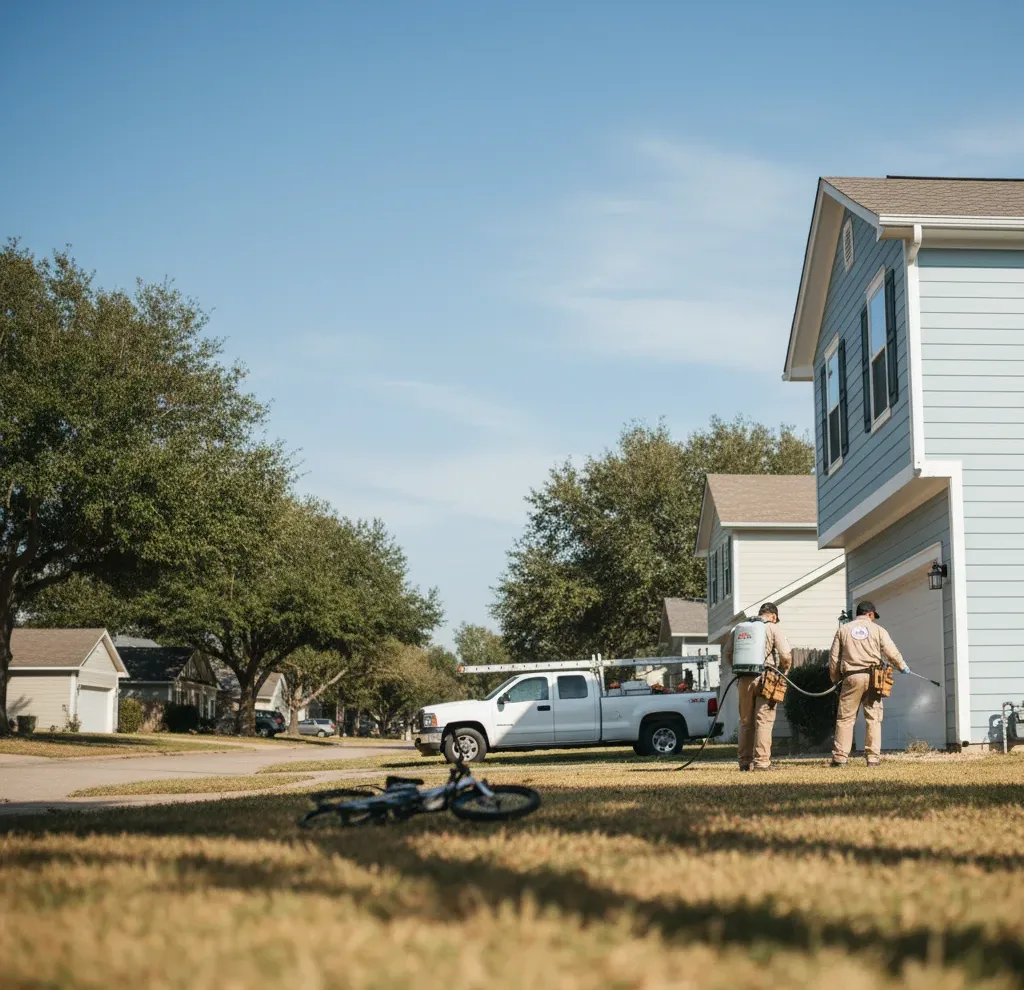
Technicians map active areas first, then choose between liquid and bait methods for pest control based on construction type. Records are left with the owner so future questions can be answered from the same diagram.
Homeowners spot small piles of sawdust-like bits near baseboards or faint mud tubes on foundation walls. Those signs show termites traveling from soil into the wood framing. An inspector lifts floor registers, checks behind appliances, and pokes sill plates with a screwdriver to check for softness. If damage shows up, it's mapped so treatment targets only the active spots instead of the whole building. Soil around the outside gets checked too, since underground colonies use ground contact points. This kind of check separates harmless carpenter ant debris from real termite damage.
Liquid barriers go into trenches around the foundation when soil access is clear. Bait stations get placed in the yard when the building sits on a slab or when chemical use near wells must stay limited. In both cases the goal is to interrupt the colony rather than simply spray visible insects. Attic inspections add another layer when drywood termites are suspected, since those colonies stay inside the wood itself. The inspector explains each option on site so the owner can decide based on cost, access, and how the house is built.
FAQ

Larger structures, difficult access points, and the need for multiple product types all affect the total. The inspection identifies these factors before any work begins so the owner can decide how much to address at once.
Removing food sources and clearing clutter reduces available shelter and can slow activity. However, locating the actual entry points and confirming the species usually requires tools and experience that are not part of a standard household routine.
A technician walks the full interior and checks adjacent spaces that share walls or utility lines. Evidence such as droppings or rub marks often appears beyond the original report. Mapping these points shows whether the issue is contained or has spread.